
Laura Alix is the Director of Research at Bank Director, where she collaborates on strategic research for bank directors and senior executives, including Bank Director’s annual surveys. She also writes for BankDirector.com and edits online video content. Laura is particularly interested in workforce management and retention strategies, environmental, social and governance issues, and fraud. She has previously covered national and regional banks for American Banker and community banks and credit unions for Banker & Tradesman. Based in Boston, she has a bachelor’s degree from the University of Connecticut and a master’s degree from CUNY Brooklyn College.

Mutuals Face ‘A Sense of Urgency’
As the number of mutual banks in the country declines, an industry conference delves into strategies for their survival.
Close
About the authors
Written by
Laura Alix
Director of Research
Laura Alix
Director of Research
In a bid to help mutual banks, the Federal Reserve could finalize a proposal governing the use of mutual capital certificates as early as next month, the vice chair for supervision said at a banking conference on Monday.
The agency released guidance over the summer for when proceeds from the capital certificates may be treated as Tier 1 capital and clarifying the use of dividend waivers, under Regulation MM. Because they lack shareholders, mutual banks have limited means for raising additional capital, and the guidance proposed in June is intended to help mutuals attract capital.
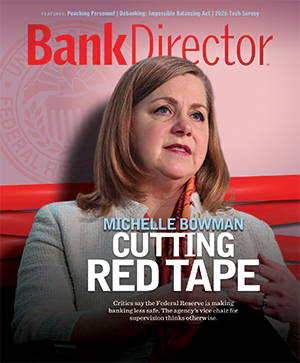
Michelle “Miki” Bowman also said she hoped the Federal Financial Institutions Examination Council will finalize revisions to the CAMELS supervisory framework by the end of the year. All banks are evaluated for capital adequacy, asset quality, management, earnings, liquidity and sensitivity to market risk under the system. In May, the FFIEC, where Bowman serves as chair, issued a proposal to remove the overweight consideration given to the management component of the rating system.
Mutual banks have faced the same industry consolidation as their peers. According to one analysis by the ratings firm Morningstar DBRS, the number of mutual savings banks nationwide declined 40% to 224 organizations with a combined $108 billion in assets as of June 30. Morningstar’s analysis is based on figures from the American Bankers Association.
Bowman stressed that she wants to make sure her proposals are durable and tailor regulations for the size of the bank. “We’ve recently made cost benefit analysis a required part of all of the regulation that we put forward,” she said at the conference. She added that regulators need to “make sure that we understand the impacts on the industry and on the individual institution, but two, we need to make sure that whatever it is that we’re putting forward is the right thing for the economy.”
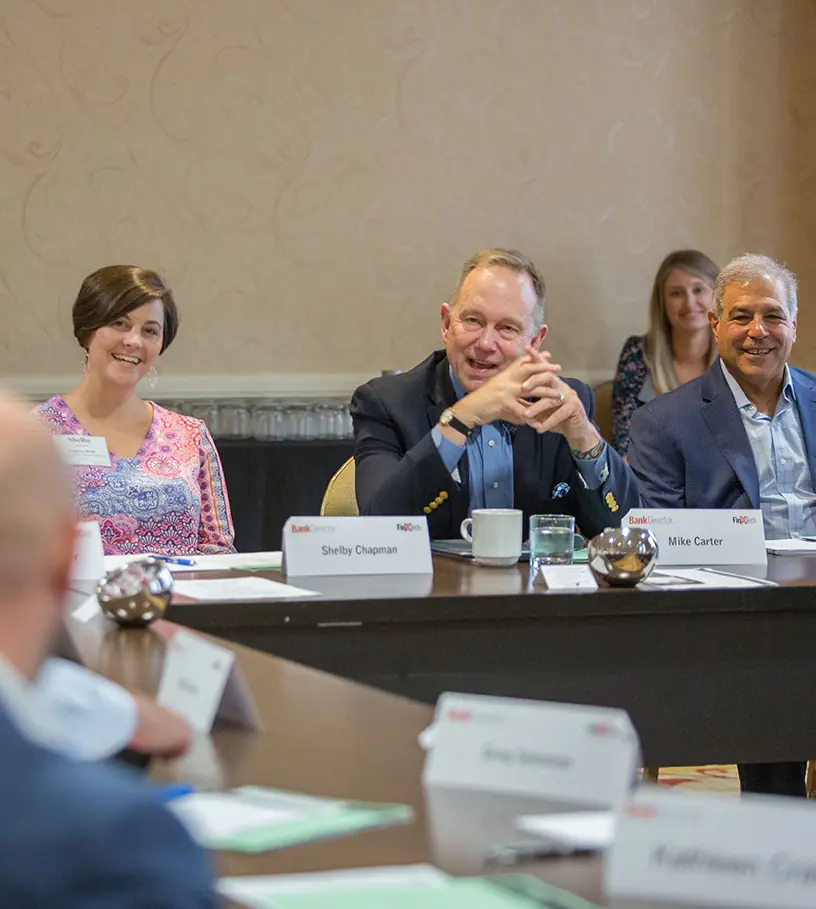
The Mutual Board Summit hosted by Mutuals Matter and Bank Director brought together more than 200 bankers to discuss challenges particular to mutual banks, from capital management to succession planning to staying relevant for the next generation. Mutuals are owned by their depositors rather than shareholders.
For mutual banks that are interested in potentially raising capital, the board needs to consider how it will use the proceeds of capital certificates, how its state regulator views the instrument, and who may want to buy it. “We’re not sure who the investors are going to be yet,” said Derek Szot, a managing director with the investment banking firm Piper Sandler Cos. “We’re excited as a firm that sells products to investors for it, but it has to be marketable. It has to be something they’re interested in. And you ask the questions you would with other things: Would you buy a mutual capital certificate in some of your brethren around this room here?”
Mutual capital certificates can offer a nonbinding targeted rate to investors but cannot promise a specific distribution rate. The proceeds must be noncumulative, and the certificates must be subordinate to any other liabilities the issuer may have. Szot likened them to trust preferred securities.
Like many other community financial institutions, mutual banks often struggle to recruit and retain talent. Many bank leaders today entered the industry via in-house training programs at large regional banks, many of which have been whittled away over the past few decades. “We’ve had a brain drain for 30-plus years,” said Larry Spaccasi, a partner with the law firm Luse Gorman. “We haven’t had the big banks training the next [generation]. And most smaller institutions either don’t have robust training programs or mentoring or do enough to promote people internally — identifying good prospects, having them go across different disciplines and train them up through the system.”
Community banks also face a rapidly changing competitive landscape, in which they’re competing for core deposits not only with other banks but also with nonbank fintech companies, such as Chime. Mutual banks must approach strategic planning with “a sense of urgency,” said Tim O’Brien, head of North American Financial Institutions Ratings with Morningstar.
They might consider expanding products and services to remain relevant to younger account holders and potentially appeal to new customer segments. Community financial institutions can leverage customer data to offer those products in a more tailored way. In some cases, they may need to partner with fintech firms or other mutuals to achieve that growth.
Finally, mutual banks can attract talent and customers when they lean into their community focus and not-for-profit structure in their messaging. “The mutual bank model remains relevant and effective,” O’Brien said. “However, it’s possible that clients need to be reminded of this.”
WRITTEN BY
Laura Alix
Director of Research
Laura Alix is the Director of Research at Bank Director, where she collaborates on strategic research for bank directors and senior executives, including Bank Director’s annual surveys. She also writes for BankDirector.com and edits online video content. Laura is particularly interested in workforce management and retention strategies, environmental, social and governance issues, and fraud. She has previously covered national and regional banks for American Banker and community banks and credit unions for Banker & Tradesman. Based in Boston, she has a bachelor’s degree from the University of Connecticut and a master’s degree from CUNY Brooklyn College.