

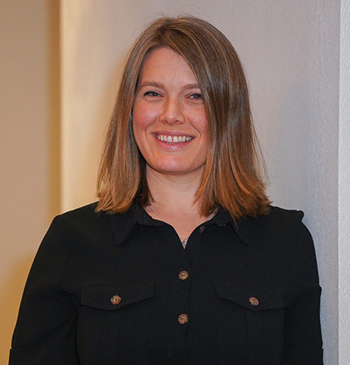
Laura Alix is the Director of Research at Bank Director, where she collaborates on strategic research for bank directors and senior executives, including Bank Director’s annual surveys. She also writes for BankDirector.com and edits online video content. Laura is particularly interested in workforce management and retention strategies, environmental, social and governance issues, and fraud. She has previously covered national and regional banks for American Banker and community banks and credit unions for Banker & Tradesman. Based in Boston, she has a bachelor’s degree from the University of Connecticut and a master’s degree from CUNY Brooklyn College.

How Boards Can Navigate a Stunning Rate of Change
Speakers at Bank Director’s Bank Board Forum addressed an array of longtime and emerging risks for bank boards.
Close
About the authors
Written by
Laura Alix
Director of Research
Laura Alix
Director of Research
Banks face an enormous degree of strategic pressure and a stunning rate of change today, but those forces also represent opportunities for savvier institutions.
While the industry enjoys a friendlier regulatory environment, it also faces new competitive threats from nonbank fintech firms pursuing banking charters. Stablecoin and cryptocurrency could threaten banks’ deposit franchises by drawing funds out of banks but may also be key to retaining certain customer segments. Artificial intelligence technologies promise greater efficiency, but boards must also understand where they make the most sense for the bank.
More than 400 bank leaders gathered this week in Austin, Texas, to learn about these issues during Bank Director’s Bank Board Forum. Content was largely organized into one of three tracks — audit and risk, compensation and governance — with the overarching aim to help boards become more effective in their governance roles.
CEO succession planning, for example, is critical for every bank’s long-term independence and often requires that the board broach some difficult conversations with the current chief executive. The board of $993 million FFD Financial Corp., in Dover, Ohio, began those discussions about a decade ago with Trent Troyer, currently board chair and formerly CEO of its subsidiary bank.
“We felt that we had to do an honest assessment of potential internal candidates, listing their strengths and weaknesses and potential development opportunities,” he said. “We did this for all senior positions, not just the CEO.”
Beginning those discussions early allowed the bank sufficient runway to develop internal candidates for succession, which the board prioritized over recruiting an external candidate from another organization. That development included special projects for candidates. For instance, Matt Miller, who ultimately succeeded Troyer, was appointed to lead expansion into a new market. And while the board did not publicize its plans, Troyer declared his intention to retire three years out, so the organization began officially positioning Miller for the transition.
Emerging technologies present another inflection point for bank boards, and stablecoin is a prime example of this. While a more recent effort aimed at regulating digital assets failed to make it out of the Senate, the July 2025 passage of the GENIUS Act established a regulatory framework for stablecoin, a type of cryptocurrency that’s pegged to a fiat currency.
Still, just 10% of banks have a formal strategy for stablecoin, according to Bank Director’s 2026 Technology Survey, and 63% of executives and directors surveyed felt stablecoin was overhyped in terms of its potential impact to the industry. But more banks should devise a strategy for stablecoin, even if that strategy is to sit out stablecoin for the time being and see what use cases emerge, several speakers said.
“There’s obviously a lot of headlines about stablecoins and digital assets and innovation, but the question becomes, how is that relevant for any particular institution?” said David Portilla, a partner with Davis Polk & Wardwell. “For some institutions, that may mean building the wallet capability to offer your customers the ability to hold and transfer stablecoins through your app. For other institutions, it may mean participating in a stablecoin consortium that’s being formed. … You have to look at the risks and opportunities for your particular institution.”
That requires strong governance of technology, he added. The board needs to ask management about key risks relevant to those new technologies, including Bank Secrecy Act and anti-money laundering compliance, as well as cyber risk and information technology risk.
Board members don’t need to become experts in AI either to ask the C-suite where and how the bank may be using those technologies and what kind of outcomes they aim to achieve, said Greg Neumann, Bank Director’s banking and fintech editor. Directors should also ask about the quality of data the bank is using to feed AI tools.
“The AI you’re using, whether it’s generative AI or agentic AI, it’s only going to be as good as the data it has access to,” he added. “Because that’s huge if these are going to be worthwhile for your bank.”
For the board to be a strategic asset to the organization as a whole, it has to challenge the bank’s chief executive officer, said Jim McAlpin, a bank director and longtime bank attorney who sits on Bank Director’s board. “I think the regulatory image of the board is that we’re watchdogs. We’re going to make sure bad things don’t happen, but proactively, what can we do?” he said. “You can ask insightful questions. … That’s when you become a stronger board, when you develop your own knowledge.”
WRITTEN BY
Laura Alix
Director of Research
Laura Alix is the Director of Research at Bank Director, where she collaborates on strategic research for bank directors and senior executives, including Bank Director’s annual surveys. She also writes for BankDirector.com and edits online video content. Laura is particularly interested in workforce management and retention strategies, environmental, social and governance issues, and fraud. She has previously covered national and regional banks for American Banker and community banks and credit unions for Banker & Tradesman. Based in Boston, she has a bachelor’s degree from the University of Connecticut and a master’s degree from CUNY Brooklyn College.