


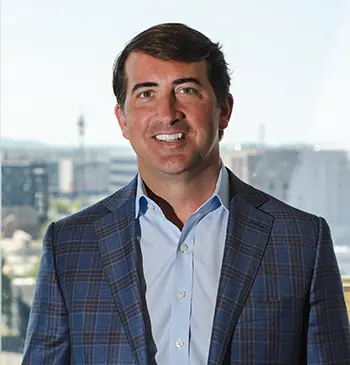
David Benskin is the Founder and CEO of Wealth Access, the leading wealth data insights platform, pioneering the transformation of wealth management in banking. Formerly a First Vice President and partner on a Merrill Lynch Private Banking and Investments team, David spent over thirteen years with the company. Today, he helps banks recognize and capture the revenue potential of wealth management by leading with data-driven solutions.

How Banks Can Win With Wealth
Banks that leverage wealth will win by combining relationship building with digital experience for the next era of growth.
Brought to you by Wealth Access Inc.

Close
About the authors
Written by
David Benskin
Founder and CEO
David Benskin
Founder and CEO
Over the last decade, fintechs won attention not by understanding clients better than banks, but by simply making money easier to see.
Instant gratification is the new baseline. But banks have important context to add to an investor’s full financial picture: trust, deposits, lending relationships and estate knowledge. The problem is that those assets sit behind separate systems, so the client never sees them working together. As the next generation of beneficiaries expect an ability to move wealth in seconds, banks must prepare to serve the great wealth transfer experience, or risk attrition in an era of opportunity.
Where Fintechs Win
Give fintechs credit for reducing friction. A client can ask what they own, where it is going and what to do next without booking time at your branch. Mike Foy, head of wealth intelligence at JD Power, said it best, “The continued growth of fintech players in the wealth management space has really raised the bar on investor expectations of a truly personalized digital experience.”
Digital experience might be more valuable than most bank executives want to admit. Fintech apps prompt, notify and recommend, rather than reporting months later. Not every prompt is sophisticated advice. But the market has spoken. Consumers view experience as integral to doing business at your firm. By late 2025, fintech app penetration reached 78%, up 20 percentage points since 2020, according to Plaid and The Harris Poll. Fee transparency reinforced the idea that fintech value includes clarity and speed.
The Bank Advantage
The fintech edge is interesting. Yes, a neobank with a nice interface has discovered the market value and even captured a corner of a client’s financial life. However, a bank sees checking activity, deposit balances, mortgage needs, commercial lending, business ownership, family liquidity, trust structures and how accounts move between generations.
Banks have every ingredient to take advantage of how the next generation moves and grows their money. The bank is the center of every conversation when a client sells a company, supports aging parents or moves money after a death in the family. No interface can manufacture your investor’s life story.
Here’s where wealth management gives banks a significant competitive advantage. Wealth is at the crossroads in a bank where credit, cash flow, estate planning and family governance meet. An app can rebalance a portfolio. It cannot walk an owner through the tax and family consequences of selling the business that created the wealth. This is the whole argument. Wealth is key to banking growth just by giving excellent investors the gift of sight and then building the relationship. Putting the power in investors’ hands helps them make their best life decisions.
Where to Start
Modernizing wealth starts with connecting the client data the bank already owns, so advisors and bankers work from the same record. Here are the three moves every bank can make today:
Let clients see their wealth in your digital experience. When a client has to leave the banking app for a separate portal, the bank introduces friction when the relationship should get stronger. Heirs in particular will not tolerate a disconnected experience, whatever respect they hold for the institution.
Give the right teams the right context. Commercial may know a business owner is preparing for a liquidity event. Retail sees new deposits. Trust understands the family structure. Wealth has heard about outside assets. Every department is doing its job, and the institution still cannot act with precision because no one sees the whole client. Think about how to tell a complete story to your clients and give them a way to see it themselves.
Protect advisors’ time. Advisors who spend hours reconciling reports and chasing documents before a meeting are not building relationships. When money-in-motion alerts, held-away assets, and succession signals surface automatically, the advisor opens with a question about the client instead of a question about the numbers.
Parting Advice
Banks do not need to out-build fintechs on features. They need to activate what they already hold: connected data, the people clients trust and the visibility investors now expect. Start with the data. Connect it once, then let every conversation stem from an investor’s full financial picture. Winning over a trendy fintech isn’t the point. The point is to serve your clients throughout their lives, the lives of their kids and the lives of future generations. Wealth is a way to get there.
WRITTEN BY
David Benskin
Founder and CEO
David Benskin is the Founder and CEO of Wealth Access, the leading wealth data insights platform, pioneering the transformation of wealth management in banking. Formerly a First Vice President and partner on a Merrill Lynch Private Banking and Investments team, David spent over thirteen years with the company. Today, he helps banks recognize and capture the revenue potential of wealth management by leading with data-driven solutions.