

Brendan M. Whalen, CPA, is audit and assurance principal with S.R. Snodgrass, P.C. He is responsible for all aspects of audit engagements, from planning and performing fieldwork to analyzing high-risk areas. With comprehensive experience in all elements of accounting and business management, Brendan has valuable insight into the industries he serves, with a primary focus on financial institutions, employee benefit plans, and nonprofits.

CECL Under Review: Weighing the Costs, Benefits and Impact
Take a look at some of the potential issues the Financial Accounting Standards Board may consider in its review of a major loan-loss accounting rule.
Brought to you by S. R. Snodgrass

Close
About the authors

Written by
Brendan M. Whalen
CPA
Brendan M. Whalen
CPA
The Financial Accounting Standards Board (FASB) is currently conducting a post-implementation review (PIR) of Accounting Standards Update (ASU) 2016-13, Financial Instruments — Credit Losses (Topic 326), commonly known as Current Expected Credit Losses (CECL). The review represents a significant milestone in the evolution of the standard, providing stakeholders with an opportunity to evaluate whether CECL is achieving its intended objectives and whether implementation challenges have produced unintended consequences.
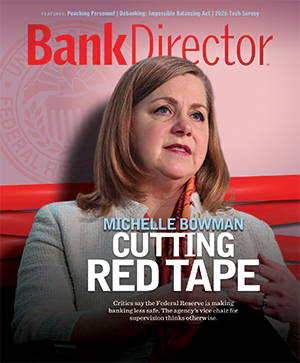
The review comes as banks, auditors, regulators and investors continue to debate the standard’s costs and benefits. Those questions are particularly significant for community banks, where concerns about CECL’s complexity and operational burden have received renewed attention from Federal Reserve Vice Chair for Supervision Michelle Bowman.
The FASB’s PIR process is designed to evaluate significant accounting standards after preparers and other stakeholders have had sufficient time to implement and apply them. It is an important component of the FASB’s standard setting process, providing an opportunity to assess whether a standard is working as intended.
Among the questions considered are whether the standard has achieved its stated objectives, improved financial reporting for investors and other users, generated benefits that justify implementation costs or produced unintended consequences.
CECL’S Origins
CECL was developed in response to concerns that the previous incurred-loss model recognized credit losses too late. Under that framework, institutions generally could not recognize a loss until it was probable based on existing conditions.
CECL fundamentally changed that approach by requiring entities to estimate lifetime expected credit losses when financial assets are originated and to update those estimates over time.
The FASB’s objective was to provide more timely recognition of expected losses and give investors and other financial statement users more forward-looking information about credit risk.
Emerging Issues
As the PIR progresses, several themes have emerged.
Costs and benefits: Community banks have questioned whether CECL’s incremental financial reporting benefits justify the costs associated with implementation and ongoing compliance. Smaller institutions have invested in software, consultants, model validation, monitoring and additional personnel.
Management judgment: Despite the sophistication of CECL models, significant management judgment remains part of the process. Estimates can vary depending on assumptions, methodologies and qualitative adjustments. This has led some practitioners to question whether complex modeling has materially reduced subjectivity compared with the previous allowance methodology.
Economic volatility: CECL’s forward-looking approach can cause reserves to increase rapidly when economic conditions deteriorate because institutions must recognize expected lifetime losses. That can affect earnings and capital during periods when banks are already facing economic pressure.
Community Banks’ Concerns
The CECL debate gained additional visibility following a September 2026 opinion article in The Wall Street Journal by Michelle Bowman. Bowman argues that the FASB’s review has reinforced concerns expressed by community bankers that CECL imposes substantial costs without necessarily providing commensurate incremental benefits.
She cites examples of the operational burden experienced by smaller institutions. One community bank reportedly spent approximately $475,000 implementing CECL and now incurs more than $260,000 annually for software, model validation, consultants, monitoring and personnel.
Another community bank reportedly spent more on its CECL vendor and model validations during a 12-month period than it experienced in actual loan charge-offs during that same period.
For Bowman, these experiences raise a fundamental question: whether the substantial investment required to comply with CECL has produced benefits proportionate to its cost.
What Comes Next?
The FASB’s PIR should not necessarily be viewed as a referendum on whether CECL should be repealed. Rather, it provides a structured opportunity to assess how the standard is functioning after years of real-world application.
For community banks, the review creates an avenue to communicate implementation challenges and concerns about proportionality and operational burden. For investors and regulators, it provides an opportunity to evaluate whether CECL has delivered more useful and transparent information about credit risk and reserve adequacy.
The ultimate result may be targeted refinements rather than wholesale replacement of the standard. Additional guidance, changes to specific requirements or greater flexibility for certain institutions could address some of the concerns raised during the review.
Regardless of the outcome, the PIR represents an important checkpoint for CECL. The central question is no longer simply whether expected credit losses can be modeled, but whether the information produced by those models justifies the cost and complexity required to produce it. How the FASB answers that question could shape credit loss accounting for financial institutions for years to come.
WRITTEN BY
Brendan M. Whalen
CPA
Brendan M. Whalen, CPA, is audit and assurance principal with S.R. Snodgrass, P.C. He is responsible for all aspects of audit engagements, from planning and performing fieldwork to analyzing high-risk areas. With comprehensive experience in all elements of accounting and business management, Brendan has valuable insight into the industries he serves, with a primary focus on financial institutions, employee benefit plans, and nonprofits.