

Sean Statz
Director
Enter your email address and password below to gain access.
To login to the Online Training Series, please click here.

As this year draws to a close, banks should revisit their CECL processes to ensure compliance and identify opportunities for optimization.


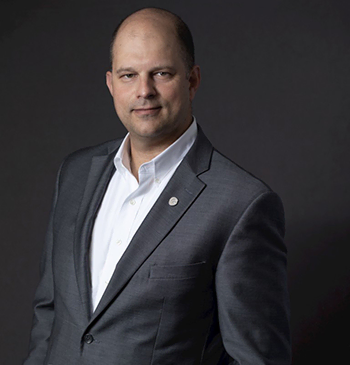
Sean Statz is a director with Baker Tilly’s risk advisory practice. He brings nearly 15 years of experience in financial institutions and is a member of the financial services team specializing in providing data analytics and financial modeling services to financial institutions. Prior to joining Baker Tilly, Sean worked for a financial institution consulting firm, specializing in mergers and acquisitions (M&A), current expected credit loss (CECL) and other data-focused advisory services to banks and credit unions.
Sam has nearly five years of experience specializing in providing data analytics and financial modeling services to financial institutions. Prior to joining Baker Tilly, Sam was a senior associate specializing in research and development tax credits using data analytics solutions to drive efficiency.
Ivan Cilik is a principal with Baker Tilly’s financial services practice. Bringing nearly 25 years of experience specializing in financial institutions, including depository and lending institutions, consumer finance and private equity companies, including publicly traded companies. He leads Baker Tilly’s credit union and banking practice and current expected credit loss (CECL) model validation team.
As we move through 2025, it’s a good time to revisit your current expected credit loss (CECL) model and processes to ensure compliance with industry best practices and to identify opportunities for enhancement and optimization. Auditors and validators continue to examine your organization’s CECL model and documentation, so it is important to stay ahead of leading practices. Reviewing recent hot topics in this area ensures that you get the most up-to-date insights and avoid regulatory headaches. All of that is beneficial to your organization, whether you’re preparing for an audit, a regulatory exam, model validation or simply assessing your CECL model.
Leading Practices for CECL Model Governance
Common gaps identified include a lack of detailed process documentation, missing loan reconciliation at the segment level and insufficient internal controls, especially in vendor-based models.
Refine Your Qualitative Factor Framework
This framework helps institutions streamline qualitative calculations and reduce bias in reserve estimates.
Managing CECL Volatility
Volatility in CECL models can stem from a range of issues, including:
The first step in managing this volatility is to analyze historical data and understand trends. For example, institutions using long lookbacks that include Covid-19 era prepayments may see declining prepayment rates as those periods roll off, and it is important to know how that may impact CECL calculations.
Back Testing and Stress Testing
Back testing is now a best practice which includes validating model accuracy by comparing forecasts to actual outcomes or comparing the reserve to historical experience. Examples include:
Stress testing and scenario analysis complement this by modeling stressed scenarios to assess model sensitivity. Both techniques support regulatory expectations and internal governance.
Beyond stress testing, institutions can compare reserves and charge-off rates to industry peers as well as identify anomalies in reserve levels relative to performance metrics. These tools help institutions calibrate their models and justify assumptions during audits or validations.
As CECL continues to evolve in 2025, institutions must continue to stay ahead of expectations by reviewing their CECL procedures and documentation practices to identify areas to strengthen their models. In addition to CECL models, institutions can stop relying on a rotation of third-party validation vendors and consolidate model validation and risk advisory under a unified and strategic approach.
Sean Statz is a director with Baker Tilly’s risk advisory practice. He brings nearly 15 years of experience in financial institutions and is a member of the financial services team specializing in providing data analytics and financial modeling services to financial institutions. Prior to joining Baker Tilly, Sean worked for a financial institution consulting firm, specializing in mergers and acquisitions (M&A), current expected credit loss (CECL) and other data-focused advisory services to banks and credit unions.
Sam has nearly five years of experience specializing in providing data analytics and financial modeling services to financial institutions. Prior to joining Baker Tilly, Sam was a senior associate specializing in research and development tax credits using data analytics solutions to drive efficiency.
Ivan Cilik is a principal with Baker Tilly’s financial services practice. Bringing nearly 25 years of experience specializing in financial institutions, including depository and lending institutions, consumer finance and private equity companies, including publicly traded companies. He leads Baker Tilly’s credit union and banking practice and current expected credit loss (CECL) model validation team.